Supreme Court Rules: Good News for Birthright Citizenship, Bad News for TPS
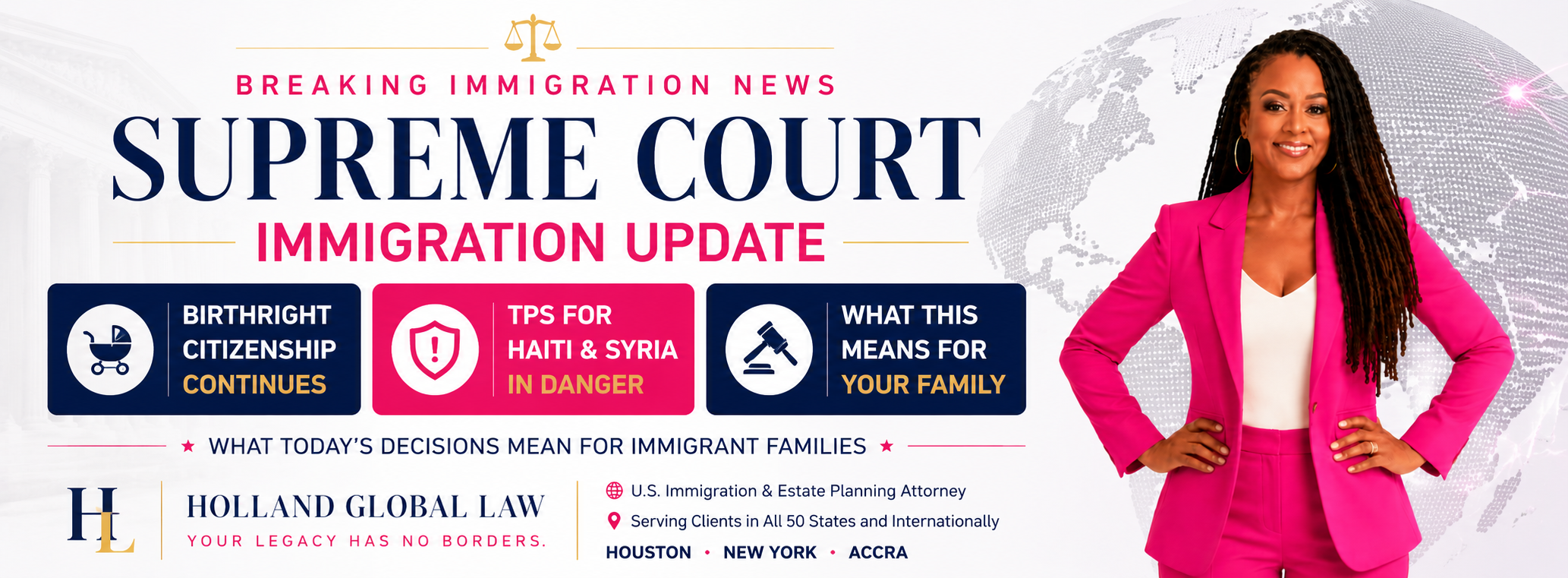
The Supreme Court issued two major immigration decisions that have left many families wondering what happens next.
The good news?
Birthright citizenship remains in effect.
The concerning news?
Temporary Protected Status (TPS) for many individuals from Haiti and Syria is facing a significant legal setback.
Here's what these decisions actually mean—and what they don't.
Birthright Citizenship Continues
The Supreme Court rejected the attempt to end birthright citizenship by executive order.
This means that children born in the United States continue to be U.S. citizens at birth under the Fourteenth Amendment.
This is extremely important.
Many families were afraid that children born in the United States to undocumented parents, temporary visa holders, or other noncitizens could suddenly be denied citizenship.
That did not happen.
Bottom line:
If your child is born in the United States, birthright citizenship remains the law.
TPS for Haiti and Syria: A Serious Setback
The second decision is much more concerning.
The Supreme Court considered whether people challenging the termination of TPS for Haiti and Syria were entitled to keep TPS protections in place while the lawsuit continued.
The Court said no.
That means the government may move forward with terminating TPS protections while the litigation continues.
This decision affects hundreds of thousands of Haitians and thousands of Syrians who have relied on TPS for protection from deportation and work authorization.
What is TPS?
Temporary Protected Status was created by Congress in 1990.
It is meant to provide temporary humanitarian protection to people who cannot safely return to their home country because of conditions such as:
• Armed conflict
• Natural disasters
• Epidemics
• Other extraordinary and temporary conditions
TPS can provide work authorization and protection from deportation, but it is not a green card, and it is not a direct path to U.S. citizenship.
The Department of Homeland Security reviews TPS designations periodically and decides whether the country still qualifies.
What Should TPS Holders Do After Supreme Court Decision?
If you have TPS, especially from Haiti or Syria, this is the time to review your immigration options.
You may need to explore whether you qualify for another form of relief, such as:
• Family-based immigration
• Marriage-based adjustment of status
• Employment-based immigration
• VAWA
• U visa
• SIJS
• Asylum or withholding, where appropriate
• Other humanitarian options
Do not assume that TPS is your only option.
Do not wait until the last minute.
Every case is different, and the best strategy depends on your personal history, family situation, immigration record, travel history, and any prior immigration filings.
What This Means for Families in Houston & Throughout the United States.?
Today’s decisions show both sides of immigration law.
Birthright citizenship remains protected.
But TPS holders from Haiti and Syria are facing serious uncertainty.
If your family is relying on TPS or another temporary immigration status, now is the time to plan ahead.
Houston & New York Immigration Attorney for Temporary Protected Status
Holland Global Law helps individuals and families navigate U.S. immigration, citizenship, estate planning, and cross-border legal matters.
We serve clients throughout all 50 states and internationally from our offices in Houston, New York, and Accra. Schedule a consultation today.